

Running a restaurant or preparing meals at home requires a clear understanding of costs. Knowing exactly how to calculate food cost for a recipe is essential not only for setting accurate prices but also for ensuring profitability and consistency. By breaking down each ingredient and measuring its value against the recipe yield, both restaurant owners and home cooks can make smarter decisions about budgeting, portioning, and menu pricing.
Why Calculate Recipe Costs?
There are many reasons why calculating recipe costs is so important. For restaurant owners, it is the foundation of profitability. If you don’t know how to calculate cost of ingredients, you risk underpricing dishes and losing money without realizing it. Calculating food cost also allows for better pricing strategies and ensures that each menu item contributes to the overall financial health of the business. It helps reduce waste, control portion sizes, and track long-term expenses. For home cooks, learning how to calculate the cost of a recipe makes budgeting easier and helps in meal planning, especially when managing a family or sticking to a tight food budget.
What Do You Need to Calculate the Cost of a Recipe?
Before you can learn how to calculate food cost for a recipe, you need to collect some basic information. First, you must know the current price of every ingredient, ideally from your most recent supplier invoices or receipts. Next, you need to measure portion sizes accurately, since recipes rarely use an entire unit of an ingredient. Recipe yield, or the number of portions one recipe produces, is another important factor. Some restaurants also add extra preparation costs, such as packaging or garnishes, to achieve an even clearer picture of their real expenses. If you have ever wondered how do you calculate the cost of ingredients, the answer starts with gathering and updating these details on a regular basis.
How to Calculate Food Cost for a Recipe
The formula for understanding how to calculate food cost for a recipe is simple.
1. Take the total cost of ingredients
2. Divide it by the recipe yield
3. Determine the cost per serving
For example, if a large batch of pasta costs forty dollars to prepare and produces twenty servings, then each portion costs two dollars. From there, you can set your selling price by applying your preferred markup or by using more advanced pricing strategies for restaurants.
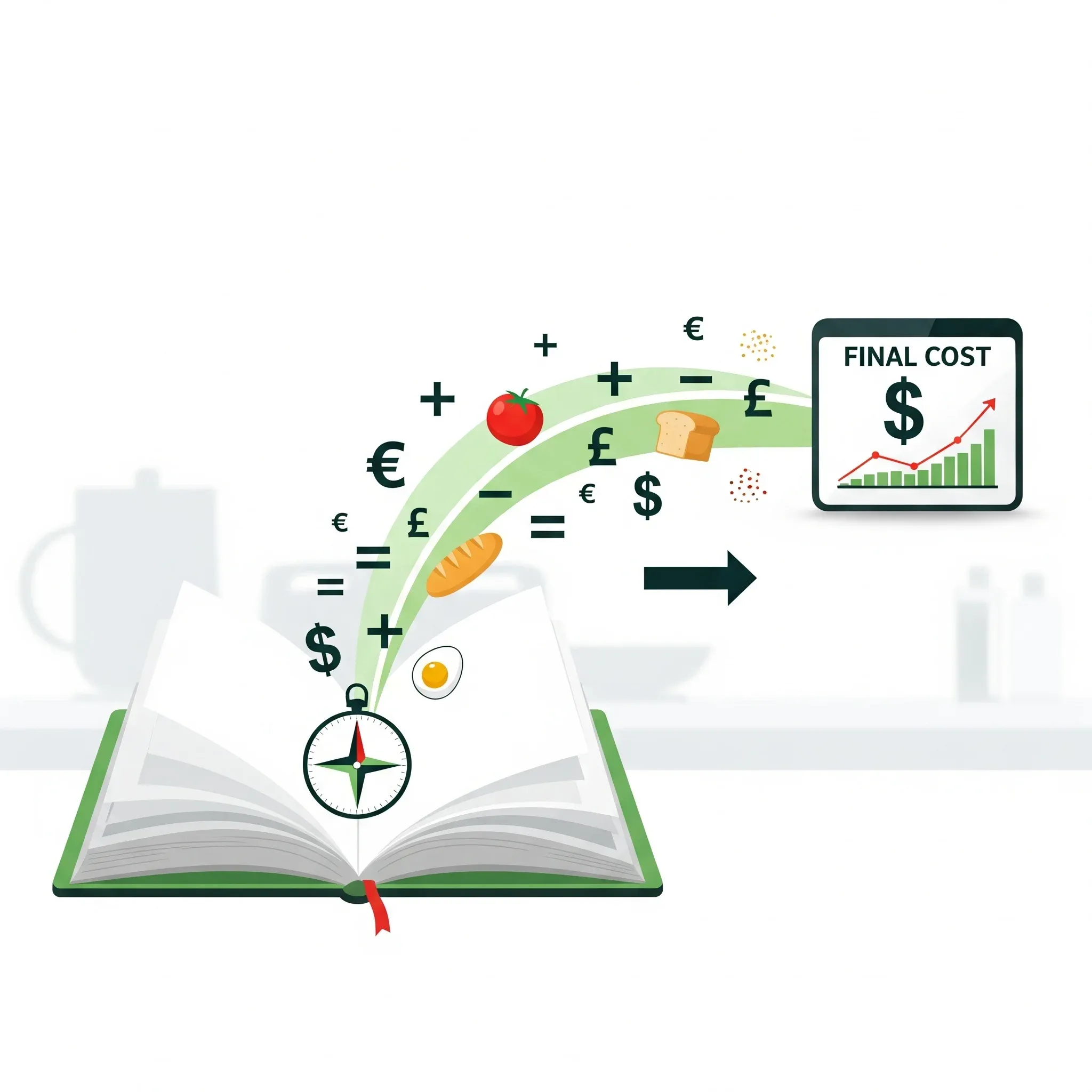
Step-by-Step Guide to Recipe Costing
When approaching recipe costing, it is important to follow a structured method. Many restaurant owners and home cooks underestimate how much their dishes truly cost because they skip steps or make rough estimates. To avoid these mistakes, you need to carefully break the recipe down into manageable parts. The following steps explain how to do food costing for a recipe in a precise and reliable way.
1. List All Ingredients
The first step is to list every single ingredient used in the dish, no matter how small. Many people forget to include items like spices, oil, or garnish, but over time these costs add up and can significantly affect profit margins. A complete list ensures nothing is overlooked when you calculate the final recipe cost.
2. Find Unit Prices
Next, look at your supplier invoices or store receipts and record the unit price of each ingredient. This could be the price per kilogram, per liter, per dozen, or any other measurement. Accurate unit prices are the foundation of learning how to calculate food cost for a recipe, since every calculation that follows depends on them.
3. Calculate the Cost per Ingredient
After you know the unit prices, calculate the cost of each ingredient in the portion you actually use. For example, if one kilogram of flour costs three dollars and your recipe uses 200 grams, then the flour costs sixty cents for that recipe. This step is essential when learning how to calculate cost of ingredients in a precise way.
4. Apply the Portion Size
Once you have the per-unit cost, apply the portion size for each ingredient. This means multiplying the unit cost by the amount used in the recipe. For instance, if one liter of milk costs one dollar and you use half a liter, your portion cost is fifty cents. Applying portion sizes ensures your calculations reflect reality and not just bulk prices.
5. Sum the Total Ingredient Costs
Now that you have calculated the cost of every ingredient, add them together to find the total recipe cost. This gives you the full amount required to prepare the entire dish. This figure is crucial because it will later be divided by the yield to determine the per-portion cost.
6. Divide by Portions
Finally, divide the total recipe cost by the number of portions the dish produces. This gives you the per-portion cost, which is the most important figure when setting menu prices. For example, if your total recipe cost is forty dollars and it yields twenty servings, each serving costs two dollars. This is the clearest and most effective way to understand how to calculate the cost of a recipe.
Also read: What is a Digital Menu
Actual vs Theoretical Food Costing
When learning how to calculate the cost of a recipe, it is also important to understand the difference between actual and theoretical food costing. Theoretical food costing is based on perfect conditions where every portion is exact and there is no waste. Actual food costing reflects reality and includes waste, spillage, spoilage, and over-portioning. While theoretical costing gives you a baseline, actual costing shows how your kitchen is really performing. Restaurants often find that their actual costs are higher than expected, which highlights the need for strong training, portion control, and inventory management.
Calculating Your Food Cost Percentage
Another essential step is calculating your food cost percentage, which measures how much of your menu price goes toward ingredients. The formula is straightforward: ingredient cost divided by menu price, multiplied by one hundred. If a dish costs five dollars to prepare and sells for fifteen dollars, the food cost percentage is thirty-three percent. Understanding this number is a critical part of how to calculate food cost for a recipe because it determines whether your pricing strategy supports long-term profitability.
What Is a Good Food Cost Percentage?
Restaurant owners often ask what percentage is considered healthy for a business. While the answer can vary depending on cuisine, location, and style of service, most restaurants aim for a food cost percentage between twenty-five and thirty-five percent. Anything much higher usually indicates that ingredient costs are cutting too deeply into profits, while anything lower may suggest that menu prices are higher than what customers are willing to pay. Learning how to calculate cost of ingredients and comparing them to your sales price is the only way to know if your margins are strong enough.
Also read: 17 Restaurant Marketing Strategies for Growth
How to Keep Food Costs Under Control
Knowing how do you calculate the cost of ingredients is one thing, but keeping those costs stable is another challenge altogether. Prices change constantly due to seasonality, supply chain issues, and inflation. Restaurants that succeed at controlling costs do so by buying local and seasonal ingredients, updating recipe cost sheets frequently, and training staff to portion consistently. Waste management also plays a key role. If a dish regularly produces leftovers or unused components, adjusting the recipe or menu may be necessary.
Setting Profitable Menu Prices
Once you know how to calculate the cost of a recipe, you can begin setting profitable menu prices. The most common methods include cost-plus pricing, where you add a markup percentage to your cost, and competition-based pricing, where you compare your prices to other restaurants in the area. Some restaurants also adopt value-based pricing, which looks at how much customers are willing to pay based on their perception of the dish. Pricing strategies for restaurants should balance covering costs with maintaining customer satisfaction, and careful recipe costing is the first step in getting that balance right.
Monitoring Menu Pricing’s Effect on Sales
Raising menu prices can be intimidating, but sometimes it is necessary to protect margins. Restaurants should monitor sales after any price change to see whether customers are responding positively or negatively. If sales volumes remain stable, then the price change was successful. If sales drop significantly, it may be time to adjust the pricing strategy again. This is why restaurant business solutions increasingly emphasize ongoing analysis of menu pricing rather than one-time adjustments.
Recommended Tech and Tools for Food Costing
While spreadsheets can help restaurants start their journey, larger businesses often rely on specialized technology to manage costs more efficiently. A digital menu builder in UAE, for example, can integrate recipe costing with menu design and pricing, automatically updating costs when ingredient prices change. These tools save time, reduce human error, and provide valuable data insights, allowing restaurants to make smarter decisions about both cost control and customer experience.
Food Inventory Management Tips for Restaurants
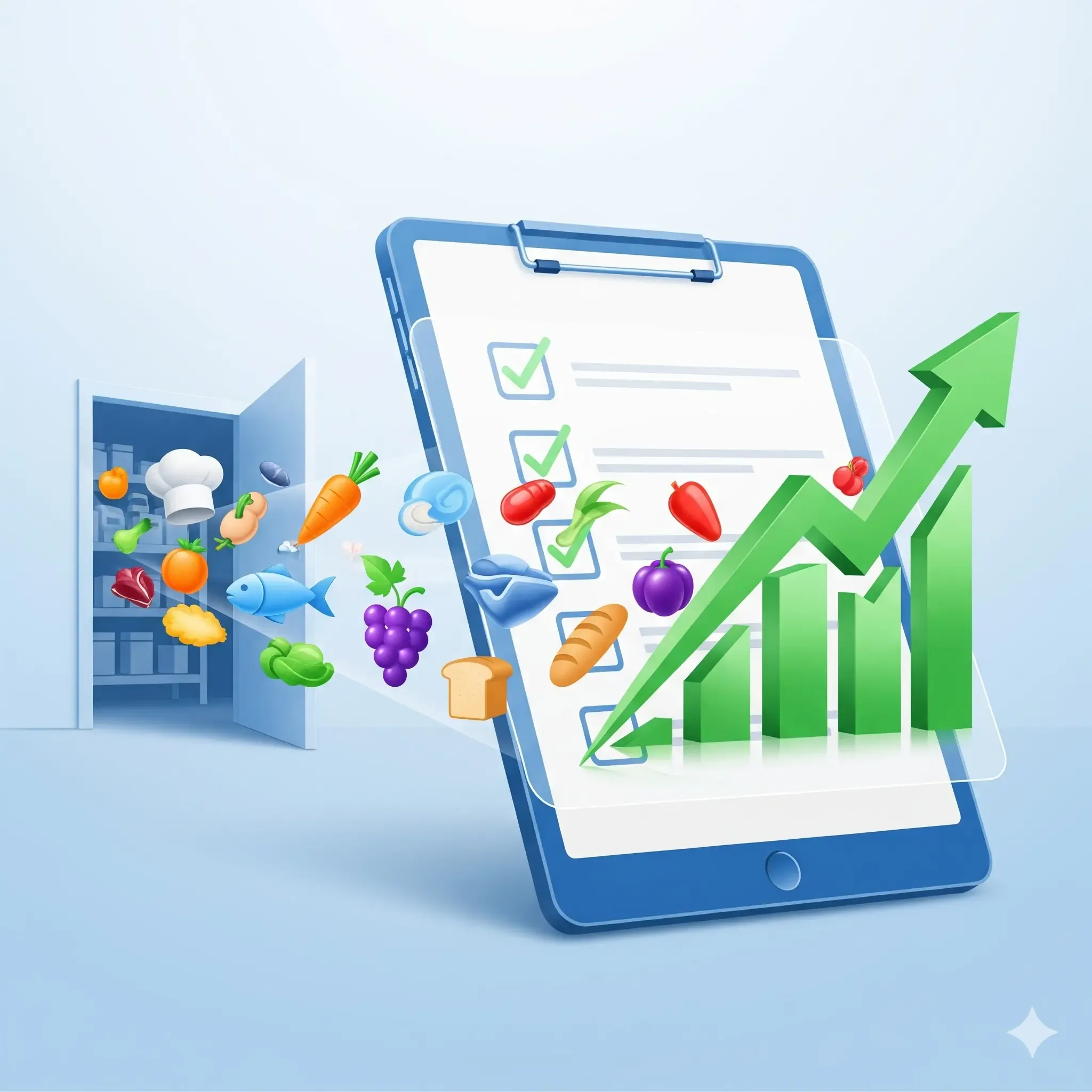
Inventory management is the backbone of recipe costing. Without accurate stock control, even the best food cost calculations will be flawed. Restaurants should conduct regular inventory counts, track supplier pricing closely, and adopt systems that integrate with point-of-sale software. By applying FIFO (first in, first out) principles and reducing waste, businesses can keep their costs aligned with the calculations they have made. This ensures that knowing how to calculate food cost for a recipe truly reflects the kitchen’s real-world expenses.
Also read: Ways to Increase Restaurant Sales
Boost Profits with ZMatjar’s Smart Digital Menu for Restaurants
ZMatjar is a comprehensive e-commerce platform that enables businesses of all kinds, including restaurants, cafés, retail shops, and service providers, to build their own professional online store. For restaurants specifically, it provides a smart digital menu builder in UAE that makes it easy to design interactive menus, update prices instantly, and showcase dishes with rich images and descriptions.
Unlike traditional printed menus, ZMatjar allows restaurants to make real-time changes whenever ingredient costs shift, ensuring menu prices stay profitable without delays or added expenses. Customers can view menus online, place orders, and even access them via QR codes, creating a seamless digital experience. Because ZMatjar is not limited to the hospitality sector, restaurants also benefit from features built for broader e-commerce, such as inventory management, secure online payments, and customer relationship tools. This makes it more than just a digital menu, it’s a complete restaurant business solution that helps streamline operations, improve customer engagement, and ultimately boost profits.
FAQs
How do I figure out the cost of one meal portion?
You divide the total ingredient cost by the number of portions the recipe produces. This simple calculation is the core of how to calculate food cost for a recipe.
Do I include spices and small ingredients in recipe costing?
Yes, even small amounts should be estimated and included. Over time, they add up and affect your overall understanding of how to calculate cost of ingredients.
How do I calculate food cost if prices keep changing?
You update your ingredient prices frequently. Many restaurants rely on software to simplify how to do food costing for a recipe when supplier costs fluctuate.
Is there an easy formula to calculate food cost per dish?
Yes, the formula is total ingredient cost divided by yield, which equals cost per serving. This straightforward method is the basis of how to calculate the cost of a recipe.
What’s the best way to track ingredient prices?
Using a centralized system or software that records supplier invoices and updates costs automatically is the most efficient way.
Can I calculate food cost without special software?
Yes, a detailed spreadsheet is sufficient for smaller operations, though software streamlines the process and integrates with restaurant business solutions.
How do restaurants keep food cost accurate when buying in bulk?
They break down the bulk purchase into smaller usable units, ensuring that they know the exact per-portion cost. This step is critical for understanding how do you calculate the cost of ingredients when purchasing in larger volumes.