In today’s fast-paced hospitality industry, efficiency and convenience are the new essentials. Restaurants, cafés, and hotels are increasingly adopting e menu systems to enhance customer experience, reduce operational errors, and improve service speed. Whether you’re running a small café or a large restaurant chain, understanding how to plan and execute your e menu system correctly can make all the difference between a frustrating experience and a flawless digital transformation.
Why Go Digital? The E-Menu Advantage
As digital dining becomes the norm, transitioning from traditional printed menus to a well-structured e menu system offers significant advantages. Customers expect convenience, and digital menus deliver just that, instant access, visual appeal, and real-time updates.
A successful e menu implementation helps you save printing costs, improve order accuracy, and easily promote new offers. But beyond that, it allows restaurants to better understand their audience through analytics and data tracking, enabling smarter business decisions.
1. Enhanced Customer Experience
Customers love control and convenience. With an e menu system, they can browse dishes, view photos, and even customize orders directly from their smartphones or tablets. The process becomes smoother, faster, and more engaging, resulting in greater satisfaction and repeat visits.
2. Real-Time Updates and Offers
Printed menus are static, any price change or seasonal offer requires reprinting. A digital e menu design eliminates this hassle by allowing instant updates. Whether you’re adding a new item or promoting a special combo, everything is just a few clicks away.
3. Operational Efficiency
Waitstaff spend less time taking manual orders and more time ensuring service quality. With e menu implementation, communication between kitchen and service staff becomes seamless, reducing errors and speeding up operations.
4. Sustainability and Cost Reduction
A digital e menu system is eco-friendly. You save on printing, lamination, and paper waste, plus, it reflects your brand’s commitment to sustainability. The result? Reduced long-term costs and a greener operation.
5. Data-Driven Insights
Every digital order generates valuable data. You can identify customer preferences, popular items, and peak ordering times. This information allows you to refine your menu, pricing, and marketing strategies for better profitability.
Key Features Your E-Menu Needs
A successful e menu system relies on more than just digitalization. It depends on thoughtful design, smart content, and smooth usability. Before diving into e menu implementation, it is essential to identify the features that make an e-menu truly effective.
1. Strong Visual Appeal
High-quality images and videos help customers imagine the dishes they’re about to enjoy. The visual element not only entices them but also increases conversion rates, beautiful food presentation sells. Your e menu design should make every item look irresistible.
2. Intuitive Navigation
A well-structured e menu system should allow customers to find what they need quickly. Categories like “Appetizers,” “Main Courses,” “Desserts,” and “Beverages” make browsing effortless. Avoid clutter and focus on clean, logical organization.
3. Mobile Compatibility
Since most users will access your e-menu on their smartphones, mobile responsiveness is critical. A professional e menu implementation ensures that your menu adjusts perfectly to all screen sizes for a consistent experience.
4. Multilingual Options
For restaurants in diverse markets like the UAE, offering multiple language options is essential. A multilingual e menu design ensures every customer feels welcomed and understood.
5. Easy Updates and Management Dashboard
An easy-to-use backend is key for daily operations. Your staff should be able to update menu items, prices, and images without needing technical skills. The e menu system should also allow real-time tracking of popular dishes and order volumes.
6. Integration with POS and Delivery Platforms
Smooth integration between your e menu system, POS, and delivery platforms ensures accuracy and efficiency. Orders go straight to the kitchen, minimizing miscommunication and reducing wait times.
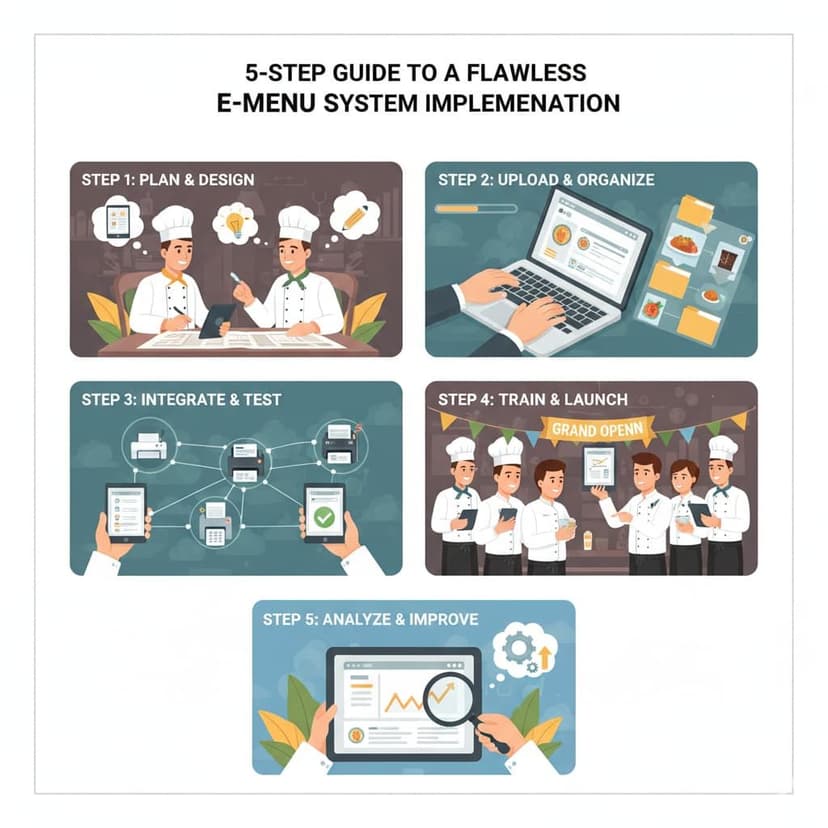
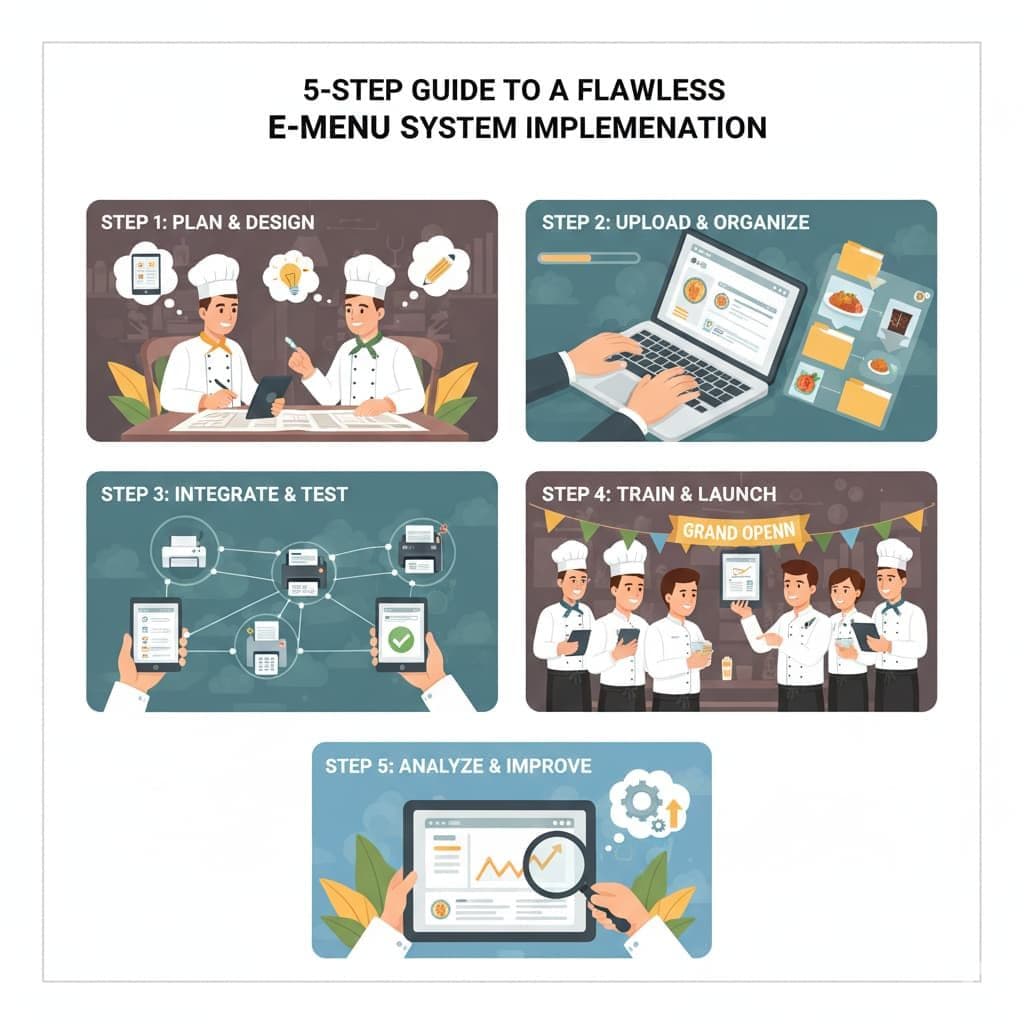
The 5-Step E-Menu Implementation Guide
Now that you understand why going digital matters and what features to include, it’s time to explore the practical process of executing your e menu system. Whether you’re upgrading an existing setup or starting from scratch, these five steps will ensure your project runs smoothly.
Step 1: Content is King
Your e menu system is only as strong as the content it showcases. From mouth-watering descriptions to vivid imagery, the goal is to make customers crave what they see.
Craft Engaging Descriptions
Each dish should have a short, tempting description. Focus on sensory words like “crispy,” “creamy,” or “slow-cooked.” Mention ingredients clearly to assist customers with dietary preferences.
Use Professional Photography
Invest in high-quality food photos. Avoid generic stock images, customers want to see your dishes. Natural lighting and minimal editing create authenticity and appetite appeal.
Highlight Specials and Promotions
Use featured sections to display seasonal dishes or chef recommendations. Smart e menu design encourages customers to try new items and boosts upselling.
Step 2: Choosing Your Platform
Selecting the right platform is the foundation of a successful e menu implementation. The ideal solution should balance functionality, flexibility, and affordability.
Cloud-Based vs. Local Hosting
Cloud-based systems offer automatic updates and remote management, perfect for restaurant chains or businesses with multiple branches. Local hosting might suit small cafés seeking complete control.
Customization Capabilities
If you want a solution tailored to your brand, consider a custom e-menu with Zmatjar. Zmatjar allows restaurants to personalize their digital menus, ensuring they align perfectly with branding, layout preferences, and customer flow.
Ease of Integration
Your platform should integrate easily with POS systems, payment gateways, and analytics tools to streamline your operations and reduce redundancy.
Step 3: Design and User Experience (UX)
A great e menu design is more than just aesthetics, it’s about creating a seamless user journey that converts browsing into orders.
Prioritize Readability and Layout
Use simple fonts, clear pricing, and visually distinct sections. Keep your color palette consistent with your restaurant’s branding for a polished look.
Minimize Clicks
Customers should reach their desired dish in minimal steps. The smoother the navigation, the faster the order, and the happier the customer.
Test Across Devices
Your e menu system must work perfectly on smartphones, tablets, and desktop screens. Conduct usability tests before launch to eliminate friction points.
Step 4: Integration and Testing
Integration is the backbone of efficient e menu implementation. A disconnected system leads to errors and delays that frustrate both staff and customers.
POS and Payment Gateway Integration
Your e menu system should connect directly to your POS so orders are instantly visible to kitchen staff. Integration with payment gateways simplifies transactions and reduces human error.
Inventory and Analytics
Automated updates on stock levels prevent you from selling unavailable items. Data analytics help you understand customer behavior, what they order, when, and how often.
Testing and Quality Assurance
Before going live, run pilot tests. Ask employees and loyal customers to test the system and provide feedback on usability, loading speed, and clarity. This step ensures a flawless public launch.
Step 5: Launch and Beyond
The launch is just the beginning. A successful e menu system evolves with your restaurant’s growth.
Promote Your Digital Menu
Use social media, QR codes, and table tents to let customers know about your new e-menu. Highlight benefits like faster service, real-time offers, and contactless convenience.
Monitor Analytics
Regularly check which dishes perform best and adjust accordingly. Insights from your e menu implementation help optimize pricing, improve stock control, and refine your marketing campaigns.
Seek Customer Feedback
Encourage diners to share their thoughts. Feedback helps you spot usability issues early and improve your e menu design over time.
Partner with Experts
For continuous improvement, rely on professional partners like zmatjar services, which specialize in creating and maintaining digital solutions for hospitality businesses. They help ensure your system remains fast, reliable, and aligned with customer expectations.
Conclusion
A well-executed e menu system transforms the way restaurants operate, enhancing customer satisfaction, streamlining processes, and unlocking valuable data insights. By following these five steps, from content creation to post-launch optimization, you ensure that your e menu implementation is both smooth and effective.
Whether you’re a small café or a large dining chain, digital transformation is no longer optional, it’s essential. With online store builders in the UAE and expert support from zmatjar services, your restaurant can embrace the future of dining with confidence and style.
FAQs
How long does a typical e-menu implementation take from start to finish?
A complete e menu implementation usually takes between two to four weeks, depending on menu complexity, design customization, and system integrations.
What is the approximate cost of implementing an e-menu system?
Costs vary based on your platform choice and level of customization. A basic e menu system may start at a few hundred dollars, while advanced custom designs and integrations can reach several thousand.
Do e-menus replace physical menus completely, or should I use both?
Many restaurants adopt a hybrid approach. While e menu systems offer speed and flexibility, maintaining a few printed menus can accommodate customers less comfortable with technology.
How can an e-menu help me gather customer data and preferences?
Through built-in analytics, your e menu system tracks popular dishes, average order values, and customer behavior. This data helps you make informed decisions about promotions, pricing, and menu updates.
Also Read: Essential Features of a Successful E-commerce Website in Dubai